
By the early 1980s, established component makers had explored many ways to save weight and experimented with a range of materials. The heyday of the French manufacturers was largely over, and Italy’s market leader Campagnolo was under growing pressure from East Asia.
Japan’s Shimano had been bringing worthwhile innovations to road bike components for some time. Campagnolo had been slower to introduce new ideas and still relied in part on designs dating from the 1960s.
In the early 1980s Shimano introduced a different approach. Instead of focusing solely on component weight, it considered the aerodynamics of rider and bicycle together. That was the start of the Shimano Aerodynamics range, offered at three levels.
Adamas was the affordable option, aimed more at touring bikes. Shimano 600 AX (6300) was the upper-midrange group, and Dura-Ace AX (7300) was the flagship. These were new designs. Shimano still offered the 600 EX, 600 EX Arabesque and Dura-Ace 7200 in the same era, so the aero and conventional groups appeared side by side in the catalogue.
The aero groups brought several new ideas. Individual components such as the crankset, Dyna Drive pedals and Direction 6 hubs had already appeared under the Shimano Aerodynamics banner in the 1981 catalogue, a preview of what was in development.
Here is a page from the 1981 Shimano catalogue:

The 1982 catalogue presented the complete line: Adamas, 600 AX and Dura-Ace AX. It caught the cycling world’s attention. Many people still remember the futuristic publicity image of a rider in a silver suit and aero helmet on a silver bicycle.



The brake cables ran under the bar tape, the delta brakes used a centre-pull mechanism, and the crankset and pedals worked in a new way. The front derailleur looked and operated differently, while the streamlined rear derailleur had a positioning mechanism.
Shimano 600 AX and Dura-Ace AX components
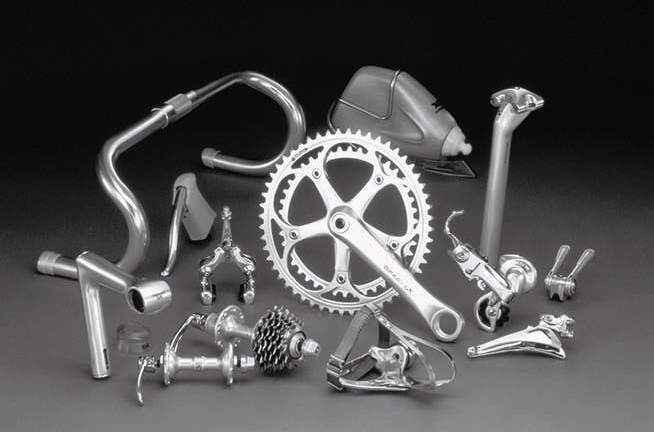
Some framebuilders and brands offered bikes to match the aero groups at launch. Shimano tested its aero components in a dedicated wind tunnel at its development facilities.
Here are the Dura-Ace AX components as shown in several catalogues:
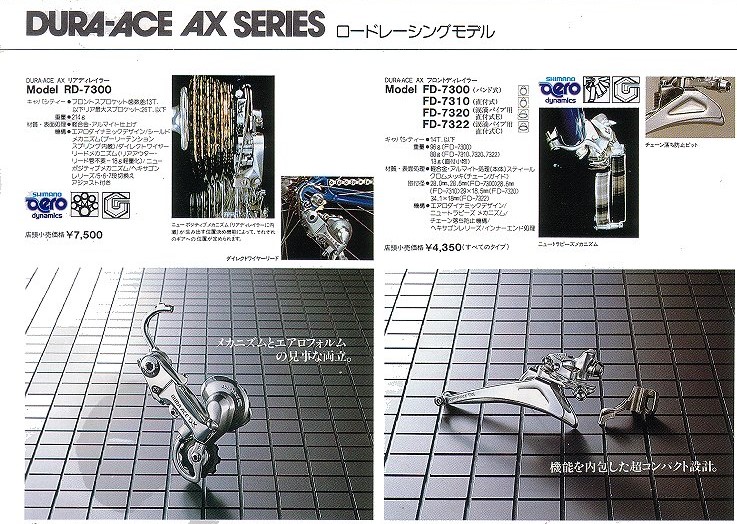
Rear and front derailleurs: Shimano RD-7300 and FD-7300–7322
Both derailleurs were new designs. The slimmer rear derailleur used a built-in indexing mechanism intended to make shifts quick and clean. Cable routing was redesigned, and Shimano’s Direct Cable arrangement fed the shift cable straight into the rear derailleur. The front derailleur came in four versions: braze-on or clamp-on for either round or aero-shaped seat tubes.

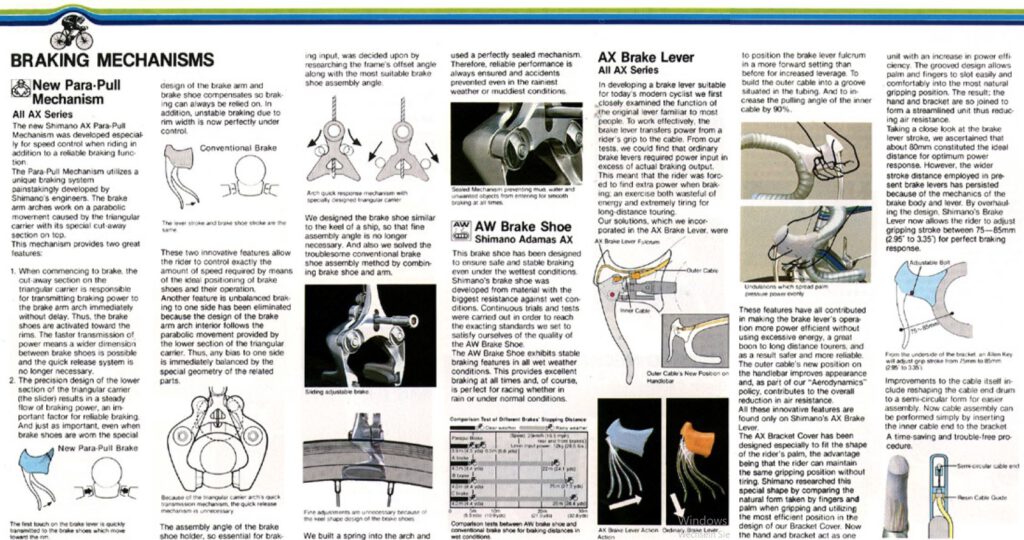
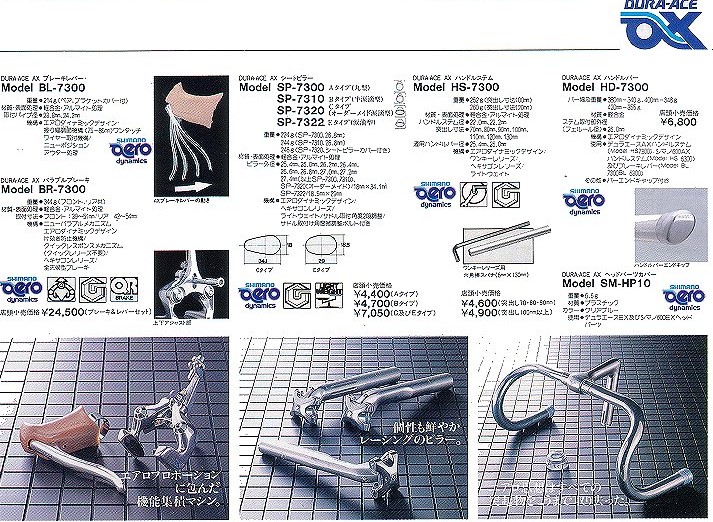
Brakes and levers: Shimano BR-7300 and BL-7300
Centre-pull delta callipers and narrow levers immediately identify the AX groups. Shimano’s Para Pull mechanism was designed to allow precise adjustment and better braking. Since the pads are fixed in the brake arms, a slot in the rear of the calliper lets you adjust the height of the entire brake. The levers route the cable under the bar tape for a cleaner aero profile. New or new-old-stock hoods for these levers are now exceptionally hard to find.
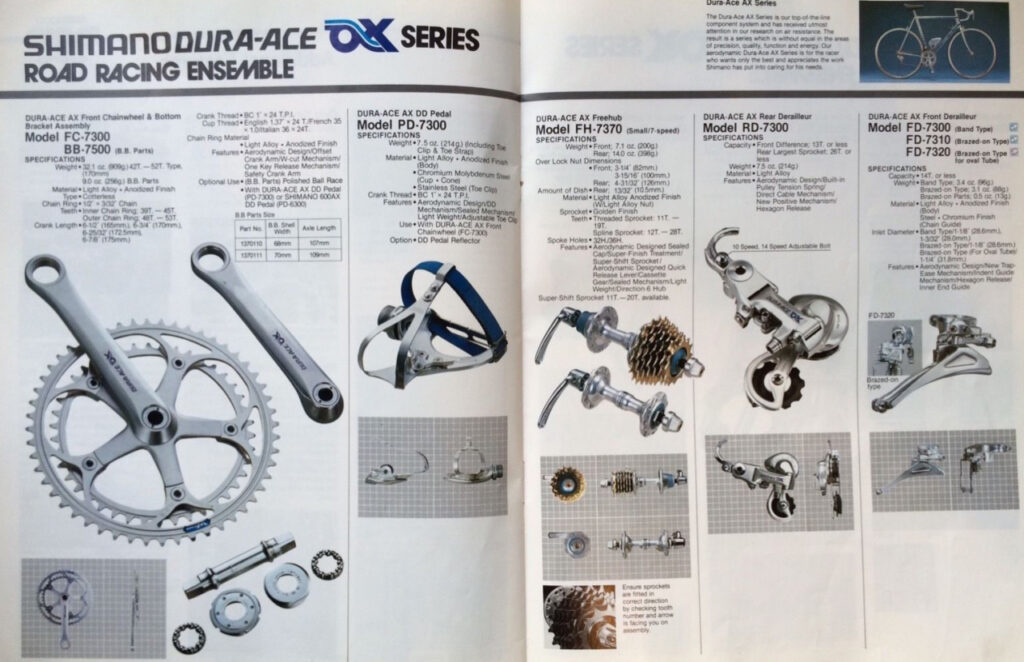
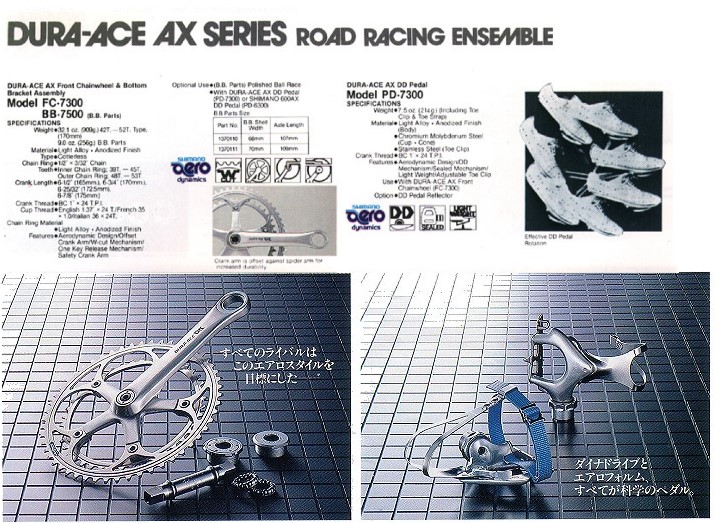
Shimano Dura-Ace AX 7300 crankset and Dyna Drive pedals
The crankset, also familiar from Dura-Ace EX 7200, was designed for Dyna Drive pedals. The pedals incorporated the bearings into the mounting assembly instead of using a conventional axle, so the pedal platform could sit below the notional axle centre. The arrangement was intended to improve how the bike felt, though the bearings were a weak point.
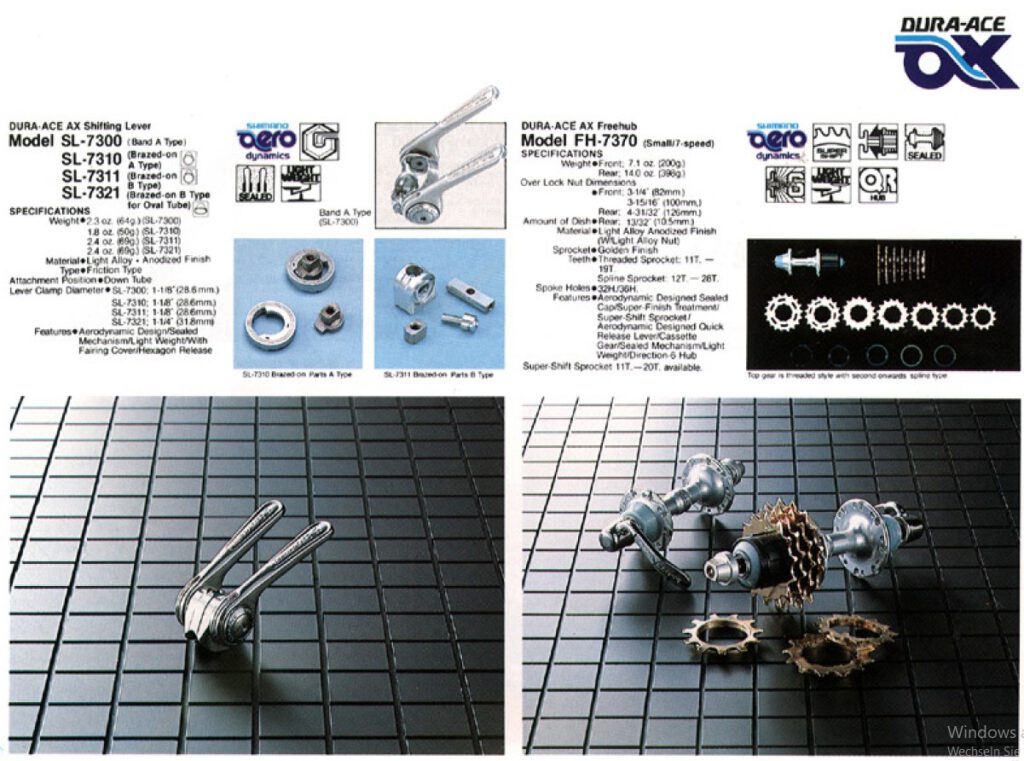
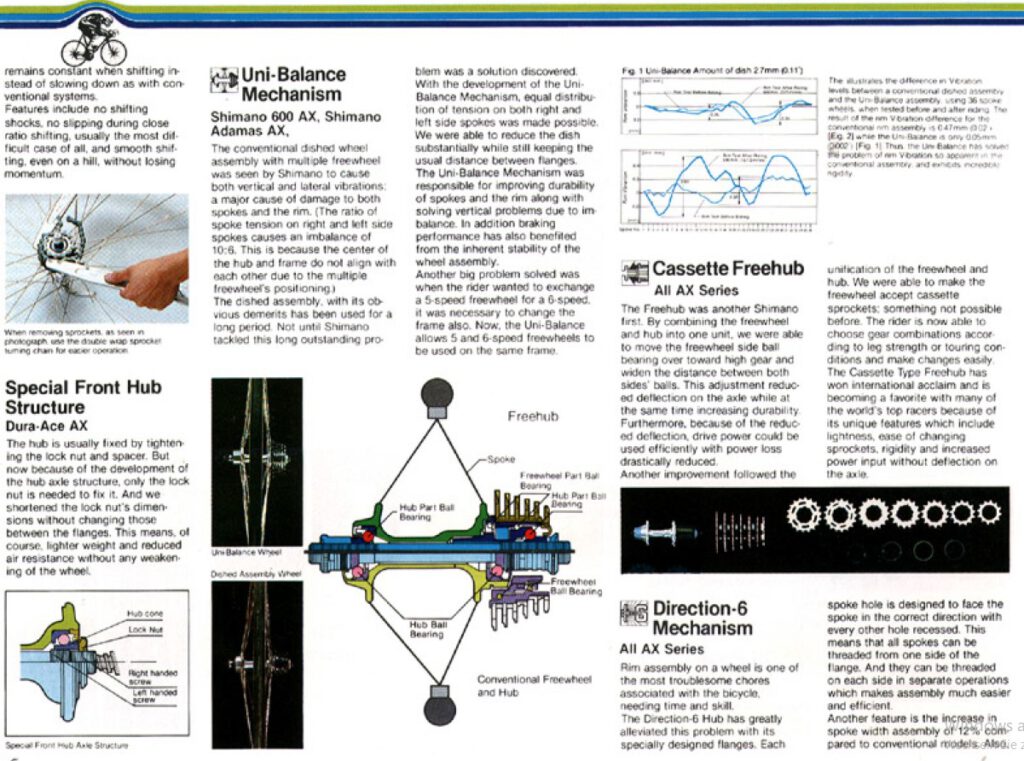
Other features of the Shimano AX groups

Here are some photos of Shimano 600 AX.

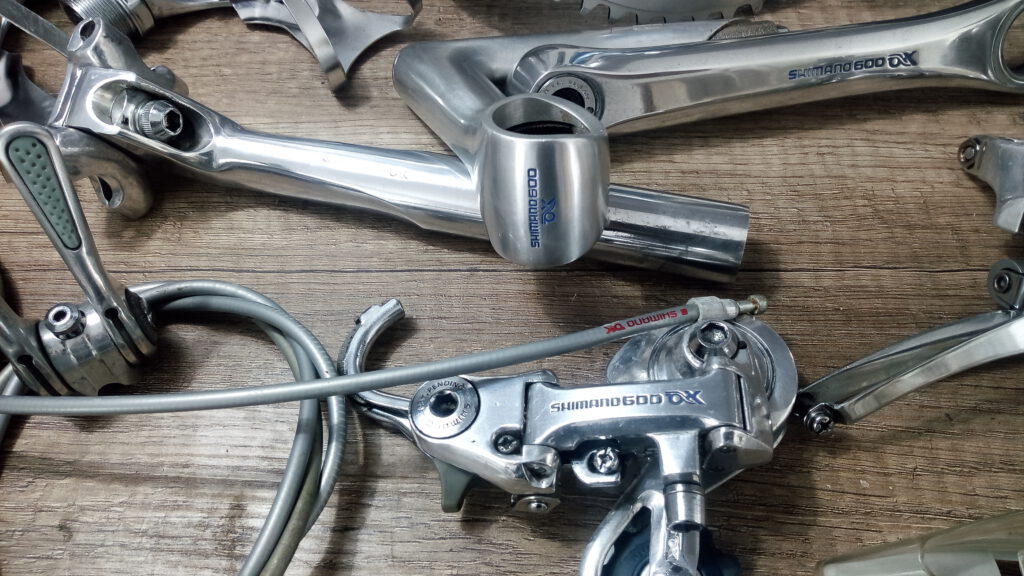


Several frames were developed to go with AX. A well-known example is the Norta Aero with shaped tubes. The same frame also appeared under names such as Jan Janssen and Diamond. These photos show a Norta Aero with a complete Shimano 600 AX groupset.


AX was not a commercial success and disappeared from Shimano’s catalogues after about three years. It still gave Shimano an advantage. European makers did not want to fall behind and brought out aero groups of their own. Campagnolo’s C-Record came years after AX. Shimano had more time to develop another classic, Dura-Ace 7400, which later introduced the first STI integrated brake and shift levers.
Shimano AX remains a fascinating piece of road cycling history and is still appreciated by collectors.